
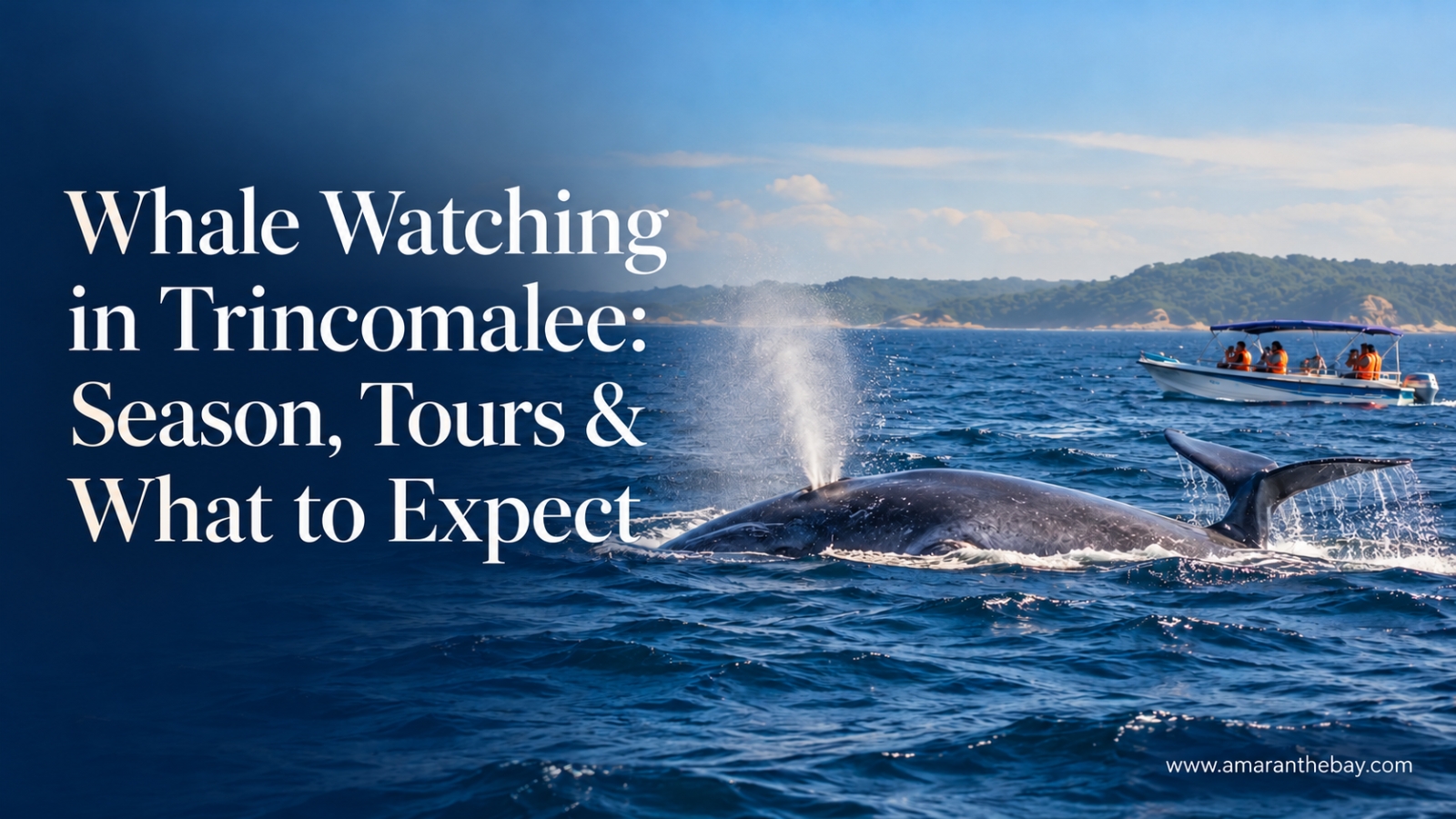
From whales and dolphins to diverse marine life, the Indian Ocean is generous and creative when it comes to marine biodiversity. If you want to see whales in the open ocean, Trincomalee, Sri Lanka, is exactly where you need to be.
With many whale-watching spots, Trincomalee is the best place to catch a glimpse of these whales. However, the chances of witnessing them increase and decrease month by month.
So, here’s a complete guide on when to plan a whale-watching trip in Trincomalee, how to make the perfect plan, and more.
Best Months for Whale Watching Trincomalee
The best window for whale watching in Trincomalee is from the months of May to September. Since the marine conditions and sea currents are exceptionally calm, the early departure from 05:30 am to 6:30 am can give you the highest possibility of witnessing whales.
- June to August – Highest Probability
This period has peak visitor turnout, as there is the highest probability of spotting blue whales and sperm whales. Calm and restful sea conditions make boat excursions popular.
- October to April – No Boats
Since the northeast monsoon brings high winds and often rough waves, there are no boat departures during these months. Almost all the local marine operators pause their boat tours.
Read More – Swimming in Trincomalee – Best Time & Beaches – Complete Guide
- May And September – Moderate Visitors
These are shoulder months and often get fewer crowds and thus fewer boat ride options. The weather is slightly less predictable. Whales are active and can be spotted, but tours completely depend upon weather conditions and sea reports.
Apart from this, it’s best to book a weekday tour that is early in the morning from 05:30 am to 06:30 am, for calm ocean, a high probability, avoiding crowds, and mid-day heat.
What to Expect From a Whale Watching Tour?
A whale watching tour requires a high level of patience. The tour is mostly an early start, with a boat ride in the open sea, and of course lots of waiting with eyes on the water to spot the whales. But as soon as the whale finally surfaces, the wait will be completely worth it.
- Early Tour
Most tours begin between 5:30 am and 7:00 am, and tourists are expected to arrive a little early for all the formalities like check-in, safety briefings, wearing the gear, and so on. Once everyone is on board, the boat heads towards the deep waters.
- Bumpy Boat Ride
The sea might look calm to the eyes, but the bumpy boat ride will tell an entirely different story. The ride takes some time and can also get rougher as the boat moves towards the deep water.
- Slow Start
The whale watching Trincomalee tour is a slow process. You’ll have to reach deep waters through a boat ride, scan the waters for whales, and wait for the right moment.
You may also notice sudden spray of water and then spot the whales. The boat will slow down so you can watch the whales surface and dive.
Whale Watching Checklist
This is the only complete checklist you’ll need to prepare for the whale watching Trincomalee tour.
- First things first, book your whale watching tour in advance, as morning slots during peak season are often full at the last moment.
- Carry your original government ID for formalities and clearance before boarding.
- Bring sun protection like sunscreen, hats, sunglasses, and a light waterproof jacket (to beat the morning cold).
- Be in touch with local operators and guides if you have any in Trincomalee to get real-time updates on weather conditions.
Other Must-Visit Sights in Trincomalee
The morning tours typically end by noon, which leaves you much time in hand to explore Trincomalee. Here’s what you can do to combine the whale watching tour and maximize your itinerary.
Just a 15-minute drive from Trincomalee Harbour, this Hindu temple is built on Swami Rock that overlooks the vast Indian Ocean. Visitors can seek blessings and spend some time soaking in the sunset view from the cliff.
2. Pigeon Island National Park
To continue the adventure, there’s another interesting water-based activity waiting for you at the Pigeon Island National Park. Book the snorkeling trip and witness blacktip reef sharks, sea turtles, and other marine life.
Read More – Pigeon Island: Snorkelling, Tickets & Boat Guide
3. Relax at Uppuveli or Nilaveli Beach
Want to take it slow after a whale watching tour? The best option is to relax at Uppuveli or Nilaveli Beach. Get your group to the shore, take a peaceful swim, enjoy the cafes/restaurants at the shore, and call it a day.
Conclusion
Whale watching in Trincomalee is more than just a simple tourist activity. The whole experience blends adventure, marvels of nature, and fun together to give unforgettable memories.
However, the most essential part is to plan well in advance, choose the right time, book a service provider, and prepare for the trip. This activity can be easily enjoyed with a family group, friends, couples, or even as a solo traveler.
Beyond whale watching, Trincomalee is a great destination for snorkeling, enjoying the beach, or even sightseeing in the city.
FAQs
1. Is Trincomalee good for whale watching?
Yes, Trincomalee is one of the best places to go for whale watching. By visiting during the best season, you can easily spot blue whales, sperm whales, and frequent pods of spinner dolphins.
2. How much does it cost to watch whales in Trincomalee?
Whale watching in Trincomalee is generally priced between $40 and $80 for standard shared or half-day boat tours.
3. What are the chances of seeing a whale while whale watching?
The chances of seeing whales on dedicated tours during peak season are high, generally between 80% and 90%, depending on the tour operator, time of visit, months of visit, sea conditions, and other such factors.